

SECTION 1: Identification of the substance/mixture and of the company/undertaking
1.1 Product identifiers
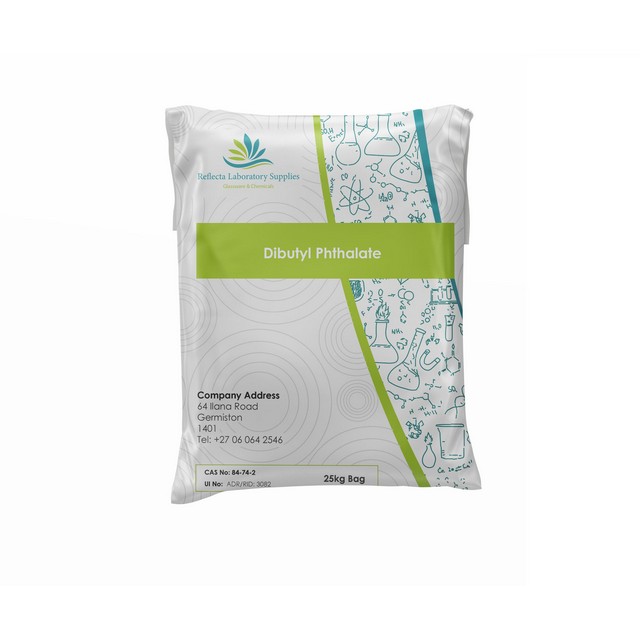
Product name : Dibutyl phthalate
Product Number : 80102
Brand : Aldrich
Index-No. : 607-318-00-4
REACH No. : 01-2119493042-44-XXXX
CAS-No. : 84-74-2
1.2 Relevant identified uses of the substance or mixture and uses advised against Identified uses : Scientific research and development
1.3 Details of the supplier of the safety data sheet
Company REFLECTA LAB SUPPLIES
SECTION 2: Hazards identification
2.1 Classification of the substance or mixture
Classification according to Regulation (EC) No 1272/2008
Reproductive toxicity (Category 1B), H360FD
Short-term (acute) aquatic hazard (Category 1), H400
Long-term (chronic) aquatic hazard (Category 2), H411
For the full text of the H-Statements mentioned in this Section, see Section 16. 2.2 Label elements
Labelling according Regulation (EC) No 1272/2008
Page 1 of 10
Pictogram
Signal word Danger
Hazard statement(s)
H360FD May damage fertility. May damage the unborn child. H410 Very toxic to aquatic life with long lasting effects.
Precautionary statement(s)
P201 Obtain special instructions before use. P273 Avoid release to the environment.
P308 + P313 IF exposed or concerned: Get medical advice/ attention.
Supplemental Hazard Statements
none
Restricted to professional users.
Reduced Labeling (<= 125 ml)
Pictogram
Signal word Danger
Hazard statement(s)
H360FD May damage fertility. May damage the unborn child.
Precautionary statement(s)
P201 Obtain special instructions before use. P308 + P313 IF exposed or concerned: Get medical advice/ attention.
Supplemental Hazard Statements
2.3 Other hazards
none
This substance/mixture contains no components considered to be either persistent, bioaccumulative and toxic (PBT), or very persistent and very bioaccumulative (vPvB) at levels of 0.1% or higher.
SECTION 3: Composition/information on ingredients
3.1 Dibutyl Phthalate ��� Substances
Synonyms : n-Butyl phthalate
Phthalic acid dibutyl ester
DBP
Formula : C16H22O4
Molecular weight : 278,34 g/mol
CAS-No. : 84-74-2
EC-No. : 201-557-4
Index-No. : 607-318-00-4
| Component | Classification | Concentration |
| dibutyl phthalate Included in the Candidate List of Substances of Very High Concern (SVHC) according to Regulation (EC) No. 1907/2006 (REACH) | ||
| CAS-No.
84-74-2 EC-No. 201-557-4 |
Repr. 1B; Aquatic Acute 1; Aquatic Chronic 2; | <= 100 % |
Page 2 of 10
| Index-No. 607-318-00-4 | H360FD, H400, H411
M-Factor ��� Aquatic Acute: 1 |
For the full text of the H-Statements mentioned in this Section, see Section 16.
SECTION 4: First aid measures
4.1 Description of first-aid measures
General advice
Consult a physician. Show this material safety data sheet to the doctor in attendance.
If inhaled
If breathed in, move person into fresh air. If not breathing, give artificial respiration. Consult a physician.
In case of skin contact
Wash off with soap and plenty of water. Consult a physician.
In case of eye contact
Flush eyes with water as a precaution.
If swallowed
Never give anything by mouth to an unconscious person. Rinse mouth with water. Consult a physician.
4.2 Most important symptoms and effects, both acute and delayed The most important known symptoms and effects are described in the labelling (see section 2.2) and/or in section 11
4.3 Indication of any immediate medical attention and special treatment needed No data available
SECTION 5: Firefighting measures
5.1 Extinguishing media
Suitable extinguishing media
Use water spray, alcohol-resistant foam, dry chemical or carbon dioxide.
5.2 Special hazards arising from the substance or mixture
Carbon oxides
Combustible.
5.3 Advice for firefighters
Wear self-contained breathing apparatus for firefighting if necessary.
5.4 Further information
No data available
SECTION 6: Accidental release measures
6.1 Personal precautions, protective equipment and emergency procedures Use personal protective equipment. Avoid breathing vapors, mist or gas. Ensure adequate ventilation. Evacuate personnel to safe areas.
For personal protection see section 8.
Page 3 of 10
6.2 Dibutyl Phthalate ��� Environmental precautions
Prevent further leakage or spillage if safe to do so. Do not let product enter drains. Discharge into the environment must be avoided.
6.3 Methods and materials for containment and cleaning up
Soak up with inert absorbent material and dispose of as hazardous waste. Keep in suitable, closed containers for disposal.
6.4 Reference to other sections
For disposal see section 13.
SECTION 7: Handling and storage
7.1 Precautions for safe handling
Advice on safe handling
Avoid exposure ��� obtain special instructions before use.Advice on safe handling Avoid inhalation of vapor or mist.
Hygiene measures
Handle in accordance with good industrial hygiene and safety practice. Wash hands before breaks and at the end of workday.
For precautions see section 2.2.
7.2 Conditions for safe storage, including any incompatibilities
Storage conditions
Keep container tightly closed in a dry and well-ventilated place. Containers which are opened must be carefully resealed and kept upright to prevent leakage. Store in cool place.
7.3 Specific end use(s)
Apart from the uses mentioned in section 1.2 no other specific uses are stipulated
SECTION 8: Exposure controls/personal protection
8.1 Control parameters
Ingredients with workplace control parameters
8.2 Exposure controls
Personal protective equipment
Eye/face protection
Safety glasses with side-shields conforming to EN166 Use equipment for eye protection tested and approved under appropriate government standards such as NIOSH (US) or EN 166(EU).
Skin protection
Handle with gloves. Gloves must be inspected prior to use. Use proper glove removal technique (without touching glove���s outer surface) to avoid skin contact with this product. Dispose of contaminated gloves after use in accordance with applicable laws and good laboratory practices. Wash and dry hands.
The selected protective gloves have to satisfy the specifications of Regulation (EU) 2016/425 and the standard EN 374 derived from it.
Full contact
Material: Nitrile rubber
Page 4 of 10
Minimum layer thickness: 0,4 mm
Break through time: 480 min
Material tested:Camatril�� (KCL 730 / Aldrich Z677442, Size M)
Splash contact
Material: Nature latex/chloroprene
Minimum layer thickness: 0,6 mm
Break through time: 120 min
Material tested:Lapren�� (KCL 706 / Aldrich Z677558, Size M)
data source: KCL GmbH, D-36124 Eichenzell, phone +49 (0)6659 87300, e-mail sales@kcl.de, test method: EN374
If used in solution, or mixed with other substances, and under conditions which differ from EN 374, contact the supplier of the EC approved gloves. This
recommendation is advisory only and must be evaluated by an industrial hygienist and safety officer familiar with the specific situation of anticipated use by our customers. It should not be construed as offering an approval for any specific use scenario.
Body Protection
Impervious clothing, The type of protective equipment must be selected according to the concentration and amount of the dangerous substance at the specific workplace.
Respiratory protection
Where risk assessment shows air-purifying respirators are appropriate use a full face respirator with multi-purpose combination (US) or type ABEK (EN 14387) respirator cartridges as a backup to engineering controls. If the respirator is the sole means of protection, use a full-face supplied air respirator. Use respirators and components tested and approved under appropriate government standards such as NIOSH (US) or CEN (EU).
Control of environmental exposure
Prevent further leakage or spillage if safe to do so. Do not let product enter drains. Discharge into the environment must be avoided.
SECTION 9: Dibutyl Phthalate ��� Physical and chemical properties
9.1 Information on basic physical and chemical properties
- a) Appearance Form: liquid, clear
Color: colorless
- b) Odor ester-like
- c) Odor Threshold No data available
- d) pH at 10 mg/l at 20 ��C
neutral
- e) Melting
point/freezing point
- f) Initial boiling point and boiling range
Melting point/range: -35 ��C ��� lit. 340 ��C ��� lit.
- g) Flash point 186,5 ��C ��� open cup
- h) Evaporation rate No data available
- i) Flammability (solid, No data available
Page 5 of 10
gas)
- j) Upper/lower flammability or explosive limits
Lower explosion limit: ca.0,4 %(V)
- k) Vapor pressure ca.97.000 hPa at ca.25 ��C
- l) Vapor density 9,58
- m) Density 1,043 g/mL at 25 ��C ��� lit.
Relative density No data available
- n) Water solubility ca.0,0114 g/l at 25 ��C ��� OECD Test Guideline 105- slightly soluble
- o) Partition coefficient: n-octanol/water
- p) Autoignition
temperature
- q) Decomposition temperature
log Pow: 4,46 at 30 ��C ��� Potential bioaccumulation
ca.390 ��C
at 1.000 hPa ��� DIN 51794
No data available
- r) Viscosity Viscosity, kinematic: 18,8 mm2/s at 20 ��C ��� ASTM D 445
Viscosity, dynamic: No data available
- s) Explosive properties No data available
- t) Oxidizing properties No data available
9.2 Other safety information
Relative vapor density
9,58
SECTION 10: Stability and reactivity
10.1 Reactivity
No data available
10.2 Chemical stability
Stable under recommended storage conditions.
10.3 Possibility of hazardous reactions
No data available
10.4 Conditions to avoid
No data available
10.5 Incompatible materials
Strong oxidizing agents, Nitrates, Bases, acids, Chlorine
10.6 Hazardous decomposition products
In the event of fire: see section 5
Page 6 of 10
SECTION 11: Toxicological information
11.1 Information on toxicological effects
Acute toxicity
LD50 Oral ��� Rat ��� male and female ��� 6.279 mg/kg
(OECD Test Guideline 401)
LC50 Inhalation ��� Rat ��� male and female ��� 4 h ��� >= 15,68 mg/l
Remarks: (ECHA)
LD50 Dermal ��� Rabbit ��� > 21.000 mg/kg
Remarks: (RTECS)
Skin corrosion/irritation
Skin ��� Rabbit
Result: No skin irritation ��� 4 h
(OECD Test Guideline 404)
Serious eye damage/eye irritation
Eyes ��� Rabbit
Result: No eye irritation ��� 72 h
(OECD Test Guideline 405)
Respiratory or skin sensitization
Maximization Test ��� Guinea pig
Result: negative
(OECD Test Guideline 406)
Germ cell mutagenicity
Test Type: Ames test
Test system: S. typhimurium
Metabolic activation: with and without metabolic activation
Result: negative
Remarks: (ECHA)
Test Type: Micronucleus test
Species: Mouse
Application Route: Oral
Result: negative
Remarks: (ECHA)
Carcinogenicity
No data available
Reproductive toxicity
May damage the unborn child.
May damage fertility.
Specific target organ toxicity ��� single exposure
No data available
Specific target organ toxicity ��� repeated exposure
No data available
Aspiration hazard
No data available
Page 7 of 10
11.2 Additional Information
Repeated dose toxicity ��� Rat ��� male and female ��� Oral ��� 90 d ��� NOAEL (No observed adverse effect level) ��� 152 mg/kg ��� LOAEL (Lowest observed adverse effect level) ��� 752 mg/kg Remarks: Subchronic toxicity
RTECS: TI0875000
Nausea, Dizziness, Headache
To the best of our knowledge, the chemical, physical, and toxicological properties have not been thoroughly investigated.
SECTION 12: Dibutyl Phthalate ��� Ecological information
12.1 Toxicity
Toxicity to fish static test LC50 ��� Lepomis macrochirus (Bluegill sunfish) ��� ca. 0,48 mg/l ��� 96 h
(OECD Test Guideline 203)
Toxicity to daphnia and other aquatic invertebrates
static test EC50 ��� Daphnia magna (Water flea) ��� ca. 2,99 mg/l ��� 48 h (US-EPA)
Toxicity to algae static test EC50 ��� Pseudokirchneriella subcapitata (green algae) ��� 0,75 mg/l ��� 10 d
(US-EPA)
static test NOEC ��� Pseudokirchneriella subcapitata (green algae) ���
0,39 mg/l ��� 10 d
(US-EPA)
Toxicity to bacteria EC50 ��� Tetrahymena pyriformis ��� 2,2 mg/l ��� 24 h
Remarks: (ECHA)
12.2 Persistence and degradability
Biodegradability Result: 81 % ��� Readily biodegradable.
(Regulation (EC) No. 440/2008, Annex, C.4-C)
12.3 Bioaccumulative potential
Bioaccumulation Pimephales promelas (fathead minnow) ��� 11 d
��� 0,0348 mg/l(dibutyl phthalate)
Bioconcentration factor (BCF): 2.165
Remarks: Does not bioaccumulate.
12.4 Mobility in soil
No data available
12.5 Results of PBT and vPvB assessment
This substance/mixture contains no components considered to be either persistent, bioaccumulative and toxic (PBT), or very persistent and very bioaccumulative (vPvB) at levels of 0.1% or higher.
12.6 Other adverse effects
Very toxic to aquatic life.
Discharge into the environment must be avoided.
Page 8 of 10
SECTION 13: Disposal considerations
13.1 Waste treatment methods
Product
Offer surplus and non-recyclable solutions to a licensed disposal company. Waste material must be disposed of in accordance with the Directive on waste 2008/98/EC as well as other national and local regulations. Leave chemicals in original containers. No mixing with other waste. Handle uncleaned containers like the product itself.
Contaminated packaging
Dispose of as unused product.
SECTION 14: Dibutyl Phthalate ��� Transport information
14.1 UN number
ADR/RID: 3082 IMDG: 3082 IATA: 3082
14.2 UN proper shipping name
ADR/RID: ENVIRONMENTALLY HAZARDOUS SUBSTANCE, LIQUID, N.O.S. (dibutyl phthalate)
IMDG: ENVIRONMENTALLY HAZARDOUS SUBSTANCE, LIQUID, N.O.S. (dibutyl phthalate)
IATA: Environmentally hazardous substance, liquid, n.o.s. (dibutyl phthalate)
14.3 Transport hazard class(es)
ADR/RID: 9 IMDG: 9 IATA: 9
14.4 Packaging group
ADR/RID: III IMDG: III IATA: III
14.5 Environmental hazards
ADR/RID: yes IMDG Marine pollutant: yes IATA: yes
14.6 Special precautions for user
Further information
EHS-Mark required (ADR 2.2.9.1.10, IMDG code 2.10.3) for single packagings and combination packagings containing inner packagings with Dangerous Goods > 5L for liquids or > 5kg for solids.
SECTION 15: Regulatory information
15.1 Safety, health and environmental regulations/legislation specific for the substance or mixture
This material safety data sheet complies with the requirements of Regulation (EC) No. 1907/2006.
Authorisations and/or restrictions on use
REACH ��� Candidate List of Substances of Very High Concern for Authorisation (Article 59).
: dibutyl phthalate
This product contains a substance listed on Annex XIV of the REACH Regulation (EC) Nr. 1907/2006.
Listed substance / Sunset Date : dibutyl phthalate / 21.02.2015Page 9 of 10
After the sunset date the use of this substance requires either an authorization or can only be used for exempted uses, e.g. use in scientific research and development which includes routine analytics or use as intermediate.
REACH ��� Restrictions on the manufacture,
placing on the market and use of certain
dangerous substances, preparations and articles (Annex XVII)
National legislation
Seveso III: Directive 2012/18/EU of the European Parliament and of the Council on the control of major-accident hazards involving dangerous substances.
15.2 Chemical Safety Assessment
: dibutyl phthalate
: ENVIRONMENTAL HAZARDS
For this product a chemical safety assessment was not carried out
SECTION 16: Dibutyl Phthalate ��� Other information
Full text of H-Statements referred to under sections 2 and 3.
H360FD May damage fertility. May damage the unborn child.
H400 Very toxic to aquatic life.
H410 Very toxic to aquatic life with long lasting effects.
H411 Toxic to aquatic life with long lasting effects.
Further information
The above information is believed to be correct but does not purport to be all inclusive and shall be used only as a guide. The information in this document is based on the present state of our knowledge and is applicable to the product with regard to appropriate safety precautions. It does not represent any guarantee of the properties of the product . RLS shall not be held liable for any damage resulting from handling or from contact with the above product. See
www.sigma-aldrich.com and/or the reverse side of invoice or packing slip for additional terms and conditions of sale.
The branding on the header and/or footer of this document may temporarily not visually match the product purchased as we transition our branding. However, all of the information in the document regarding the product remains unchanged and matches the product ordered.
Disclaimer
Information given herein is offered in good faith as accurate, but without guarantee. Conditions of use and suitability of the product for particular uses are beyond our control; all risks of use of the product are therefore assumed by the user and we expressly disclaim all warranties of every kind and nature, including warranties of merchantability and fitness for a particular purpose in respect to the use or suitability of the product. Nothing is intended as a recommendation for uses which infringe valid patents or as extending license under valid patents. Appropriate warnings and safe handling procedures should be provided to handlers and users.
Add to Wishlist
Add to Wishlist
Related products
Other
Other

Other

Other
Other
Other

Other