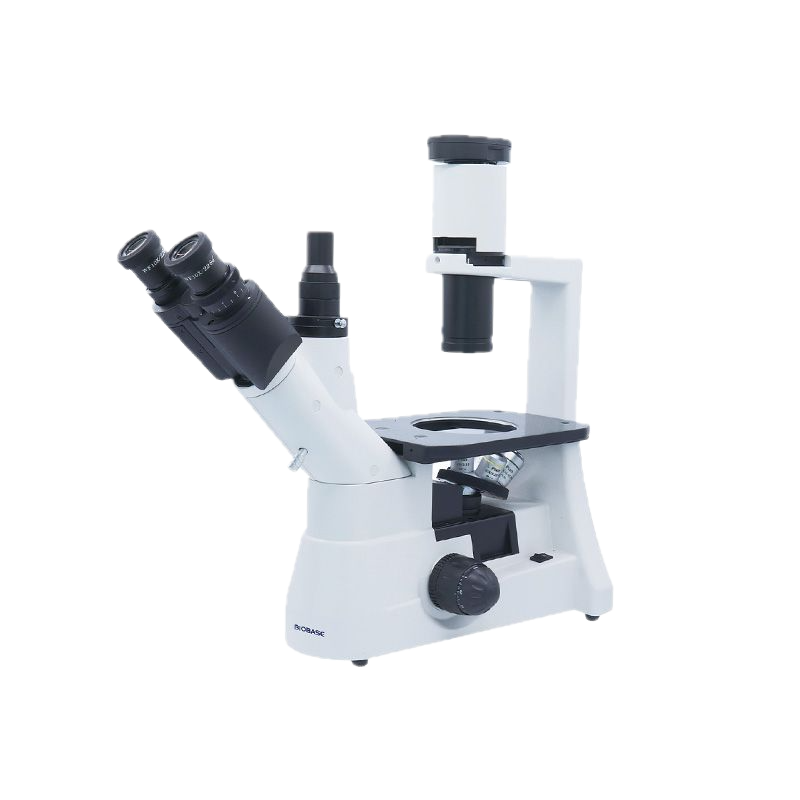
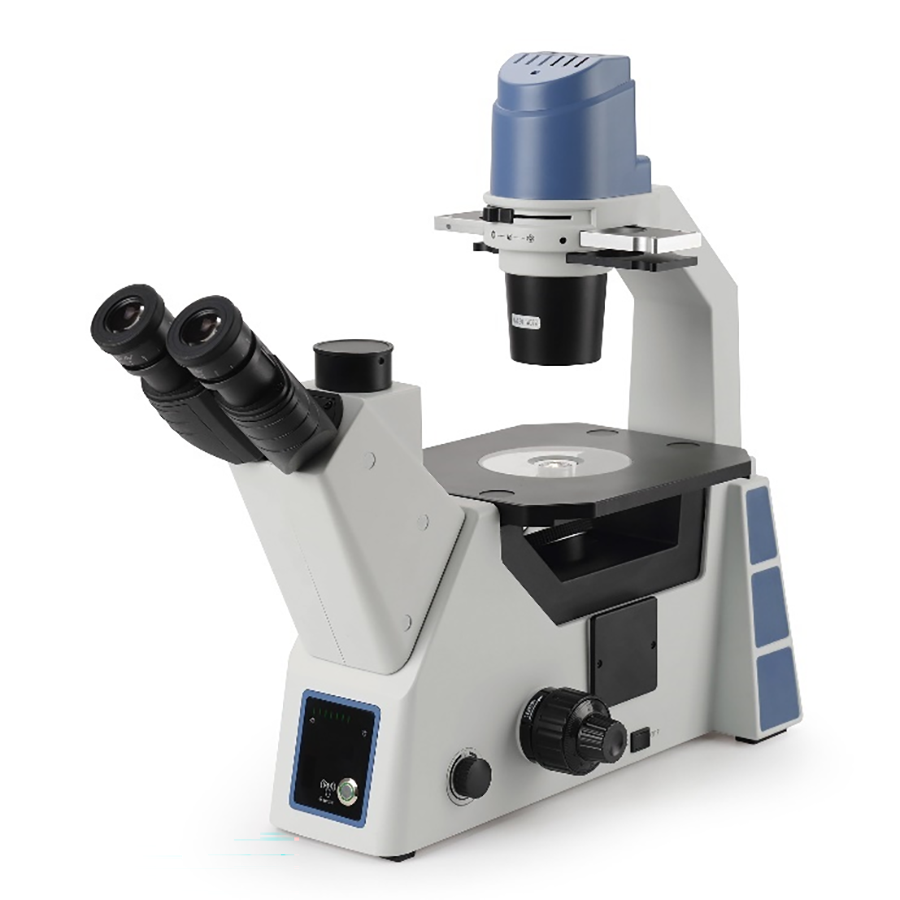
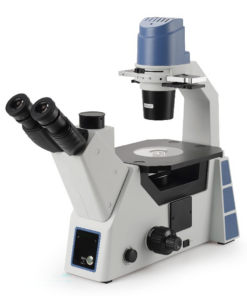
Trinocular Inverted Microscope
R84,988.00 Ex VAT
Trinocular Inverted Microscope
Inverted Microscope Trinocular
A trinocular inverted microscope is used for observing live cells, tissues, and other specimens in their culture vessels, with applications in cell culture, microbiology, and research. Its inverted design allows viewing from below, while the trinocular head enables the attachment of a camera for documentation and video recording, which is ideal for detailed imaging of living biological processes. For live cell and tissue culture
- MOTIC AE31E:
- Pros: Allows clear and comfortable observation of live cells in petri dishes or flasks. The trinocular head is excellent for attaching cameras for detailed imaging.
- Cons: More expensive than basic models.
- VELAB VE-41:
- Pros: Features a long working distance and phase contrast for viewing cellular outlines. Excellent for monitoring cell growth and activity in real-time.
- Cons: Not as rugged as high-end industrial models.
- A.KR��SS Optronic MBL3200:
- Pros: Includes a phase contrast device and a large working distance, making it perfect for observing living cells in culture and for documentation via photo or video cameras.
- Cons: May not have all the high-end features of some research-grade microscopes.
For quality control and industrial use
- Kemet KMXJL17AT:
- Pros: Built on a sturdy frame for durability, with a trinocular head for digital camera attachment. It���s ideal for examining large, bulky specimens like metallurgical samples or electronic components.
- Cons: Less flexible for biological applications.
- BIOBASE BK-TIM37XC:
- Pros: Offers high-quality optics and crisp images suitable for both laboratory and industrial use. It provides excellent ergonomics and can be configured to meet specific needs.
- Cons: May require specific configurations for specialized tasks.
For advanced research and documentation
- Conduct Science Trinocular Inverted Microscope:
- Pros: Designed for advanced research, capable of capturing images and video for live-cell imaging of cells like cancer cells or studying biological processes.
- Cons: Limited to professional research environments, and not ideal for basic applications.
- World Precision Instruments PIMT201:
- Pros: Optimized for advanced research applications like patch clamping and brain slice recording.
- Cons: Not suitable for beginners or simple applications.
Trinocular Inverted Microscope
Specification
| Model | BMI-37XC | BMI-37XE | |
| Optical System | Infinite optical system | ||
| View Head | Compensation free trinocular head, Inclined at 45��, 360�� rotatable, Interpupillary 48~75mm | ||
| Eyepiece | WF10X/22mm, P16X/20mm | P10X/20mm | |
| Objective | Infinite LWD Plan Achromatic Objective | 4X N.A=0.10 WD=25.00mm 40X N.A=0.60 WD=3.30mm |
10X N.A=0.25 WD=4.27mm 20X N.A=0.40 WD=8.00mm 40X N.A=0.60 WD=3.50mm |
| Infinite LWD Plan Phase Objective | 10X N.A=0.25 WD=8.10mm 20X N.A=0.40 WD=4.80mm 40X(Optional) |
10X N.A=0.25 WD=4.27mm 20X N.A=0.40 WD=8.00mm(Optional) 40X N.A=0.60 WD=3.50mm(Optional) |
|
| Focusing | Coaxial coarse ��� fine adjustable system, pinion and rack adjustable, fine division 0.002mm | ||
| Stage | 242*172mm, glass slide ��110mm, moving range 120*75mm | Culture dish plate 1: 86*129.5mm, ��87.5mm round culture dish is adaptive Culture dish plate 2: 34*77.5mm, ��68.5mm round culture dish is adaptive Culture dish plate 3: 57*82mm, ��60mm round culture dish is adaptive |
|
| Condenser | ELWD Condenser with Iris Diaphragm ��� Filter, LWD 75mm | ||
| Illumination | Halogen lamp 12V/30W, brightness adjustable | LED lamp, 9W, brightness adjustable | |
| Power Supply | AC85~265V��� 50/60Hz | ||
| Package Size | 655*305*630mm | 650*430*600mm | |
| Gross Weight | 14kg | 16kg |
Trinocular Inverted Microscope
Trinocular Inverted Microscope
Inverted Microscope Trinocular
A trinocular inverted microscope is used for observing live cells, tissues, and other specimens in their culture vessels, with applications in cell culture, microbiology, and research. Its inverted design allows viewing from below, while the trinocular head enables the attachment of a camera for documentation and video recording, which is ideal for detailed imaging of living biological processes. For live cell and tissue culture
- MOTIC AE31E:
- Pros: Allows clear and comfortable observation of live cells in petri dishes or flasks. The trinocular head is excellent for attaching cameras for detailed imaging.
- Cons: More expensive than basic models.
- VELAB VE-41:
- Pros: Features a long working distance and phase contrast for viewing cellular outlines. Excellent for monitoring cell growth and activity in real-time.
- Cons: Not as rugged as high-end industrial models.
- A.KR��SS Optronic MBL3200:
- Pros: Includes a phase contrast device and a large working distance, making it perfect for observing living cells in culture and for documentation via photo or video cameras.
- Cons: May not have all the high-end features of some research-grade microscopes.
For quality control and industrial use
- Kemet KMXJL17AT:
- Pros: Built on a sturdy frame for durability, with a trinocular head for digital camera attachment. It���s ideal for examining large, bulky specimens like metallurgical samples or electronic components.
- Cons: Less flexible for biological applications.
- BIOBASE BK-TIM37XC:
- Pros: Offers high-quality optics and crisp images suitable for both laboratory and industrial use. It provides excellent ergonomics and can be configured to meet specific needs.
- Cons: May require specific configurations for specialized tasks.
For advanced research and documentation
- Conduct Science Trinocular Inverted Microscope:
- Pros: Designed for advanced research, capable of capturing images and video for live-cell imaging of cells like cancer cells or studying biological processes.
- Cons: Limited to professional research environments, and not ideal for basic applications.
- World Precision Instruments PIMT201:
- Pros: Optimized for advanced research applications like patch clamping and brain slice recording.
- Cons: Not suitable for beginners or simple applications.
Trinocular Inverted Microscope
Specification
| Model | BMI-37XC | BMI-37XE | |
| Optical System | Infinite optical system | ||
| View Head | Compensation free trinocular head, Inclined at 45��, 360�� rotatable, Interpupillary 48~75mm | ||
| Eyepiece | WF10X/22mm, P16X/20mm | P10X/20mm | |
| Objective | Infinite LWD Plan Achromatic Objective | 4X N.A=0.10 WD=25.00mm 40X N.A=0.60 WD=3.30mm |
10X N.A=0.25 WD=4.27mm 20X N.A=0.40 WD=8.00mm 40X N.A=0.60 WD=3.50mm |
| Infinite LWD Plan Phase Objective | 10X N.A=0.25 WD=8.10mm 20X N.A=0.40 WD=4.80mm 40X(Optional) |
10X N.A=0.25 WD=4.27mm 20X N.A=0.40 WD=8.00mm(Optional) 40X N.A=0.60 WD=3.50mm(Optional) |
|
| Focusing | Coaxial coarse ��� fine adjustable system, pinion and rack adjustable, fine division 0.002mm | ||
| Stage | 242*172mm, glass slide ��110mm, moving range 120*75mm | Culture dish plate 1: 86*129.5mm, ��87.5mm round culture dish is adaptive Culture dish plate 2: 34*77.5mm, ��68.5mm round culture dish is adaptive Culture dish plate 3: 57*82mm, ��60mm round culture dish is adaptive |
|
| Condenser | ELWD Condenser with Iris Diaphragm ��� Filter, LWD 75mm | ||
| Illumination | Halogen lamp 12V/30W, brightness adjustable | LED lamp, 9W, brightness adjustable | |
| Power Supply | AC85~265V��� 50/60Hz | ||
| Package Size | 655*305*630mm | 650*430*600mm | |
| Gross Weight | 14kg | 16kg |
Trinocular Inverted Microscope
Related products